

Price Drops in 2026 – Potential Consequences and Protecting Your Investment
Potential consequences of housing price drops
Housing price drops can have significant consequences for both buyers and sellers. For buyers, a decline in housing prices can present an opportunity to enter the market at a more affordable price point. Price drops can be particularly advantageous for first-time homebuyers who have been priced out of the market.
On the other hand, sellers may face challenges if housing prices drop. Selling a home at a lower price than anticipated can result in financial losses and potentially impact future real estate plans. Highly leveraged homeowners facing financial difficulties may be at a higher risk of foreclosure or financial hardship if prices decline.
Strategies for buyers and sellers in a changing housing market
In a changing housing market, buyers and sellers should adapt their strategies to navigate the shifting landscape. Conducting research, understanding local market conditions, and being patient is crucial for buyers. Waiting for the right opportunity can result in securing a property at a more favorable price. As a buyer you should think about your budget and future plans. Consider taking advantage of lower housing prices but also be cautious of overextending themselves financially in other categories of spending.
If you’re a seller, you might have to lower your price hopes and get ready be prepared to see your home on the market for a longer period of time. Pricing a home competitively and ensuring it stands out in a crowded market can help attract buyers even in a declining market. Proper staging and marketing can also make a difference in attracting potential buyers.
Finally, both buyers and sellers can benefit from seeking professional advice. Real estate agents and financial advisors can offer insight and make the housing market easier to understand and navigate.
Steps to take to protect yourself in case of housing price drops
While predicting the future of the housing market is challenging, there are steps you can take to protect yourself in case of housing price drops.
- Ensure a solid financial foundation. This includes maintaining an emergency fund, managing debt responsibly, and understanding your financial goals and limitations.
- Diversify your investments beyond real estate provides a buffer against potential losses. Building a well-rounded investment portfolio that includes stocks, bonds, and other assets can help mitigate risks associated with a declining housing market.
- Regular monitoring market conditions is essential to staying informed. By keeping an eye on economic indicators, staying up to date with local market trends, and seeking professional advice, you can position yourself to make informed decisions and take appropriate action should housing prices drop in 2026.
General trends and prediction about the housing market for the next few years
Zillow expert predictions
- Return to 2019 norms: By 2024, the market is expected to have the same inventory levels and share of first-time homebuyers as in 2019.
- Slowing price growth: Home price appreciation is expected to slow down from 19% in 2021 and 9% in 2022, dropping to 3.2% by 2026.
Other market expert perspectives
- Seller’s market: Some experts believe the market will remain favorable to sellers for a longer time, citing a higher number of buyers than sellers.
- Market slowdown: The market is expected to slow down in the near future due to the higher cost of getting a mortgage and the increasing cost of living.
What this means for homebuyers and sellers
Buyers may find more homes to choose from as inventory rises but will still need to contend with higher costs in the short term, which could make buying a home more difficult.
Sellers will likely continue to benefit from high demand but will see a slower rate of price growth, be prepared to agree to concessions, and potentially have to wait longer for a sale compared to the frenzied market of the past.
A report by the National Association of Realtors shows the generational distribution of home sellers and buyers in 2025 as follows:
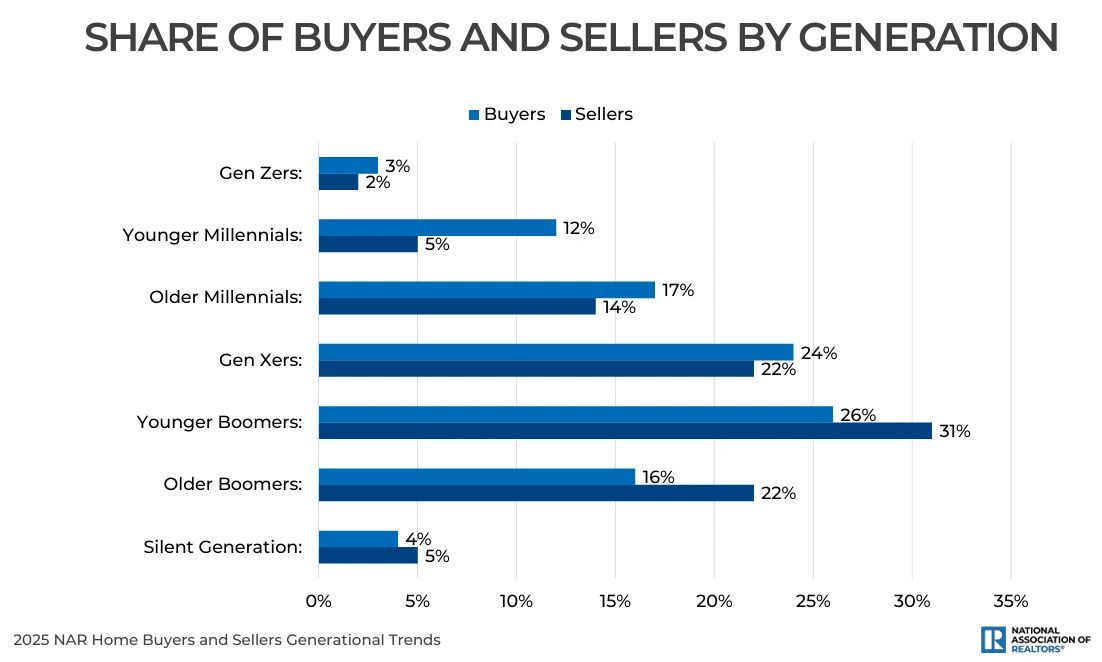
The report reveals that sellers’ median years in their home increased to 10 years and the more common reason for not selling was likely influenced by factors like the “lock-in effect” of low-interest-rate mortgages. The most common reason sellers sold a home in 2025 was to move closer to friends and family (26%). This was followed by reasons related to the home’s size (10% for too small, 10% for too large) and other changes in personal circumstances (8%).
Based on these sources, the percentage of sellers preparing to sell their homes in 2026 will depend on factors such as their age, income, lifestyle, and local market conditions. Sellers may take advantage of the high prices and low inventory to sell their homes. At the same time, others will wait for more favorable conditions or sell for personal reasons.
Preparing for the future of the housing market
As we approach 2026, the question of whether housing prices will drop looms large. While experts have differing opinions and economic indicators can provide insights, predicting the housing market’s future is challenging.
When you understand the factors that impact the housing market, monitor economic indicators, and seek professional advice, you can navigate the uncertainties and position yourself for success. Whether you are a potential buyer or seller, staying informed and adaptable is vital.
Sign up for free updates to receive the latest market insights and information to help you stay connected to your neighborhood housing market.
Updated Dec 2025
Have questions about your next move?
Schedule a no-pressure conversation with Wendy and get clear answers for your situation.